Nov 18, 2026
Content
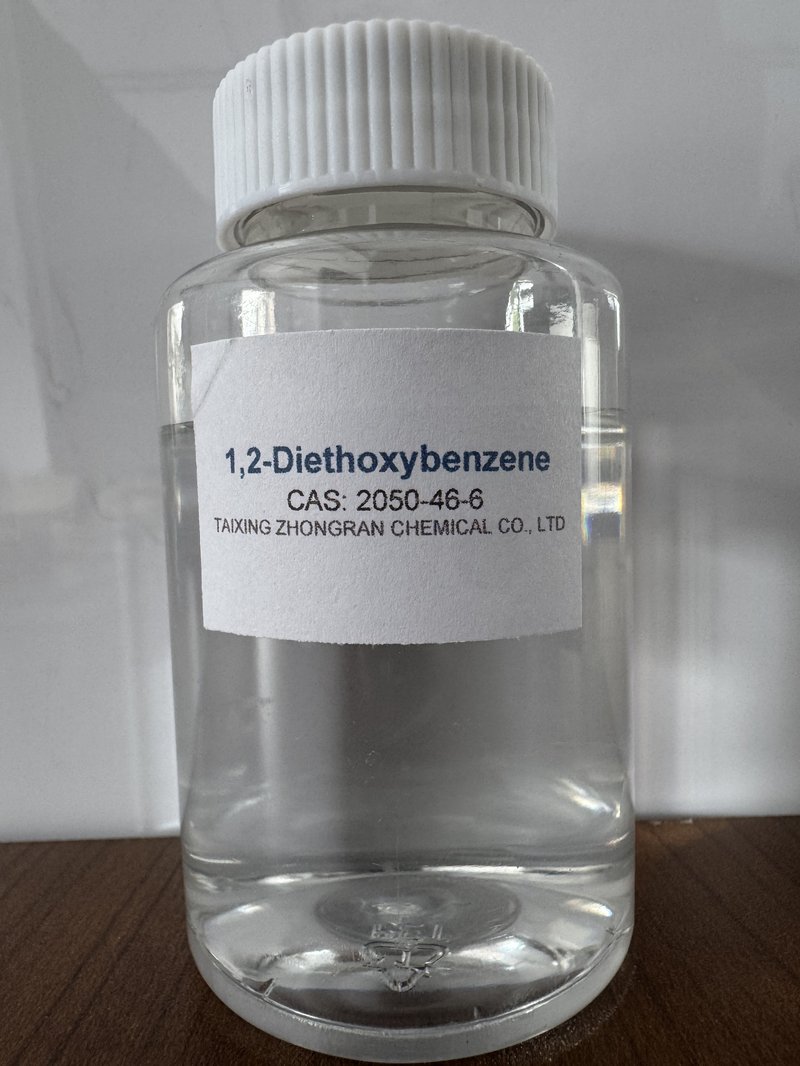
Ask a formulator about catechol derivatives and the conversation usually lands on guaiacol or veratrole. 1,2-Diethoxybenzene, registered as CAS 2050-46-6, belongs to the same small family but rarely gets the spotlight, which is a pity. This diethyl ether of catechol is a quietly dependable building block: a clear, mobile liquid at room temperature, straightforward to handle, and carrying two ethoxy groups in the ortho position where they can block a ring, direct the next substitution, or be unmasked later in a synthesis. The notes below bring together what we have picked up over the years producing and shipping this material, from specification details to the questions buyers raise most often.
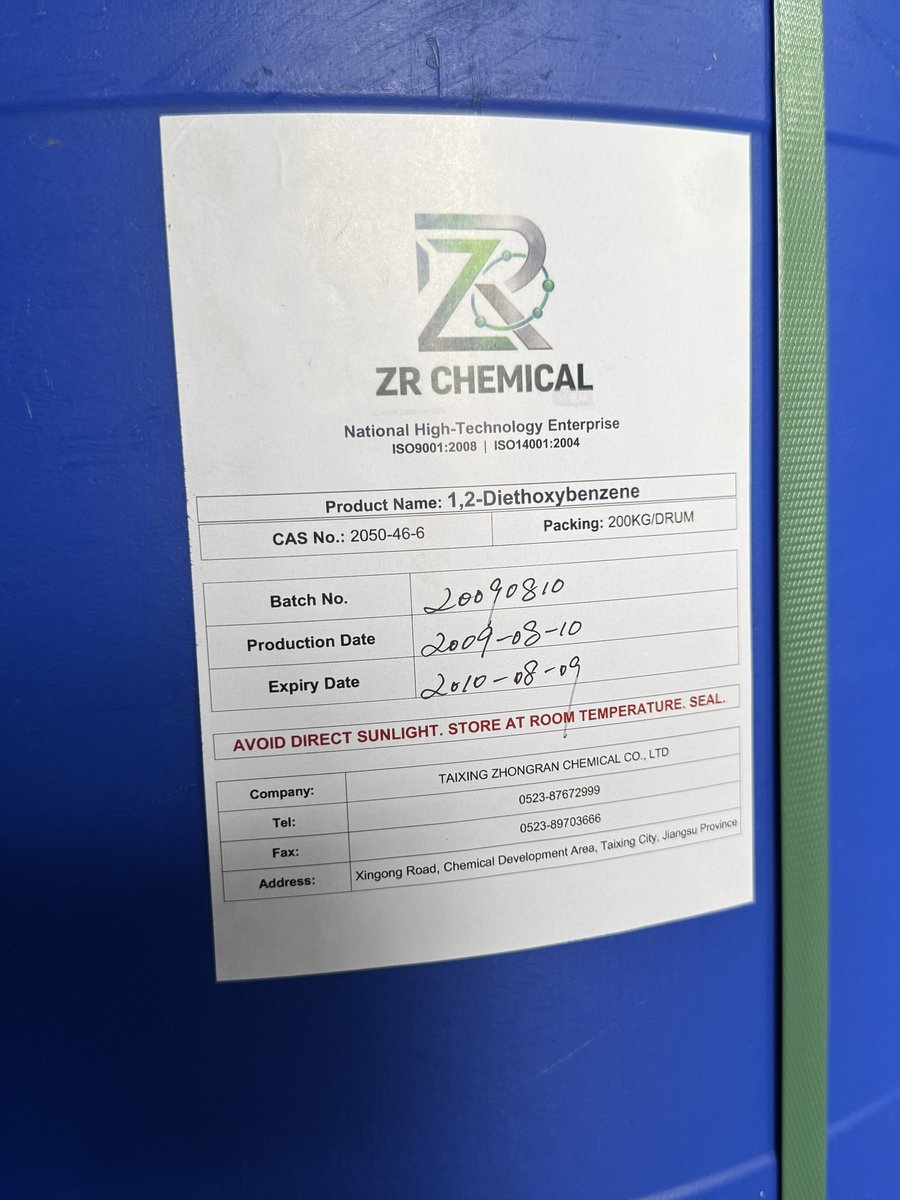 1,2-Diethoxybenzene: Catechol Diethyl Ether Building BlockA clear, mobile catechol diethyl ether with ≥99.0% purity, useful as an ortho-substituted intermediate for pharmaceuticals, agrochemicals, and fine chemicals.View Product →
Under its IUPAC name, 1,2-diethoxybenzene is a benzene ring carrying two ethoxy groups on adjacent carbons. You will also meet it in catalogues as catechol diethyl ether, o-diethoxybenzene or 1,2-diethoxybenzol, and all of those names describe the same C10H14O2 molecule with a molecular weight of 166.22. It is the ethyl analogue of veratrole, just as 2-ethoxyphenol is the mono-ethyl analogue of guaiacol, and that relationship matters when you are comparing suppliers or checking whether a lot is what it claims to be.
Because the molecule is symmetric and aprotic, it dissolves readily in ethanol, acetone, toluene and most common organic solvents, while remaining essentially insoluble in water. That combination makes it convenient for reactions run in aromatic solvents or under anhydrous conditions, and it also explains why the material is normally supplied and stored as a liquid in closed drums rather than as a solid.
| Property | Typical value or range |
|---|---|
| CAS Registry Number | 2050-46-6 |
| Molecular formula | C10H14O2 |
| Molecular weight | 166.22 g/mol |
| Appearance | Clear colourless to pale yellow liquid |
| Assay by GC | 98.0% to 99.5%, grade dependent |
| Boiling point | Approximately 216 to 218 °C at atmospheric pressure |
| Density | About 1.00 g/cm3 at 20 °C |
| Water content | Generally controlled below 0.2% by Karl Fischer |
| Solubility | Insoluble in water; freely soluble in ethanol, ether and aromatic solvents |
Almost all commercial volume comes from a Williamson etherification. Catechol is charged with a base and an ethylating agent, typically diethyl sulfate or ethyl chloride, in a solvent system that keeps the phenoxide soluble and the reaction manageable. Temperature is held in a controlled window so that ethylation proceeds cleanly rather than racing ahead into side reactions, and the mixture is then neutralised, washed free of salts, dried and fractionated under reduced pressure.
Vacuum distillation is where the specification is really won. Two impurities deserve attention. The first is residual 2-ethoxyphenol, the mono-ether left behind when the second ethylation does not complete; it shows up in GC as a slightly earlier peak and can influence downstream reactivity. The second is the positional isomer profile, since a poorly controlled reaction can shift some material toward 1,3- or 1,4-substitution. A supplier who can talk you through the distillation cut points, and who reports both assay and impurity peaks on the same chromatogram, is usually a supplier who understands the chemistry rather than simply reselling it.
The largest share of demand sits in pharmaceutical development and production, where the compound appears as a protected catechol equivalent or as a substrate for directed metalation, formylation and acylation. The two ethoxy groups are mildly electron donating and ortho-directing, so lithiation or Friedel-Crafts chemistry tends to land where the chemist expects, and the ethyl groups can later be removed under conditions that are gentler than the classical methyl ether cleavage. That combination of regiocontrol and clean deprotection is why the material keeps appearing in route scouting for active ingredients. If this is your application, our pharmaceutical intermediate applications overview shows how the phenol ethers fit alongside the rest of the catalogue.
In the flavour and fragrance world, simple alkoxybenzenes provide soft, sweet, slightly phenolic notes and act as useful synthetic stepping stones toward more complex aroma molecules. 1,2-Diethoxybenzene is not the loudest material in that palette, but it earns its place in evaluation libraries and in the synthesis of substituted benzaldehydes and related aroma compounds. Our flavours and fragrance applications page lists the adjacent products we supply regularly.
Beyond those two main directions, the compound turns up as a solvent or cosolvent in moisture-sensitive reactions, as a reference standard in analytical work, and as a starting point for agrochemical and specialty building blocks where an ortho-dialkoxy pattern is required.
A certificate is only useful if it tells you what you actually care about. For this product we look for the following, and we would encourage you to ask any supplier for the same:
It is also worth confirming that the certificate belongs to the lot in the drum, not to a generic historical batch. Cross-checking the batch number against the shipping documents takes a minute and saves a great deal of correspondence later.
Buyers often evaluate several catechol derivatives in parallel, so it helps to keep the substitution patterns straight. The table below summarises the neighbours we produce most often.
| Product | CAS number | Distinguishing feature | Common downstream focus |
|---|---|---|---|
| Guaiacol | 90-05-1 | One free hydroxyl, one methoxy group | Flavours and fragrance, pharmaceutical intermediates |
| 2-Ethoxyphenol | 94-71-3 | One free hydroxyl, one ethoxy group | Pharmaceutical and fine chemical intermediates |
| Veratrole | 91-16-7 | Two methoxy groups | Pharmaceutical intermediates, fine chemicals |
| 1,2-Diethoxybenzene | 2050-46-6 | Two ethoxy groups | Pharmaceutical and specialty intermediates |
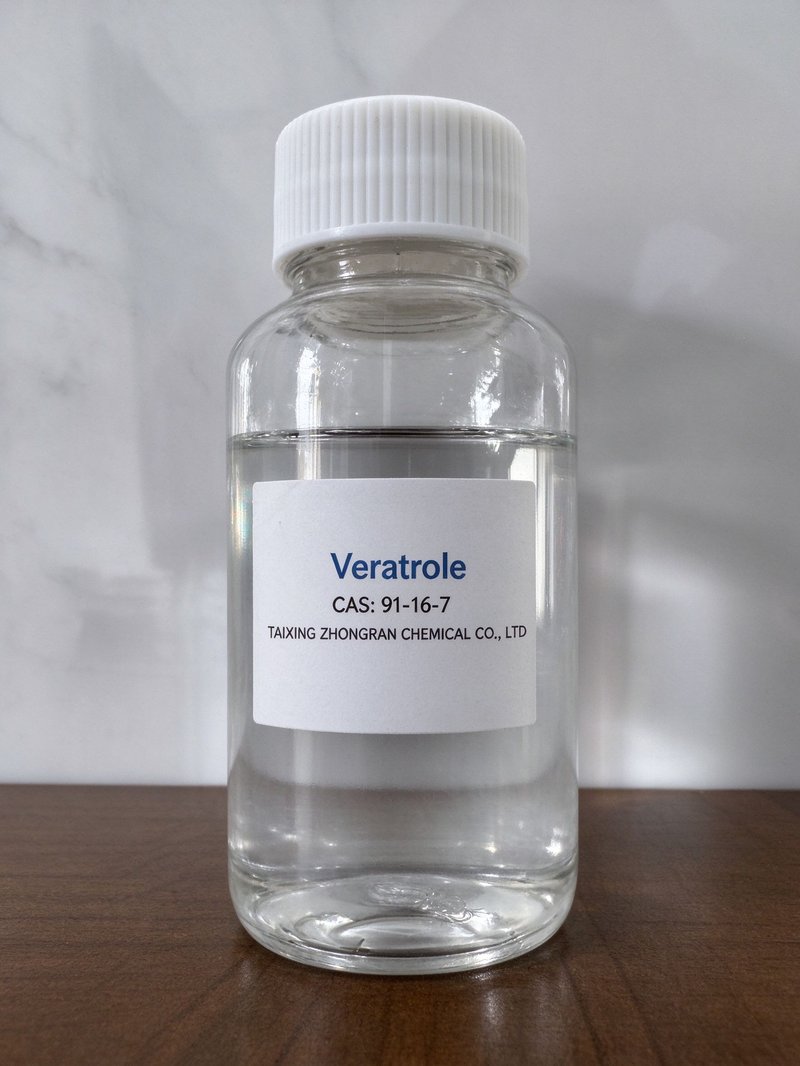 Veratrole (1,2-Dimethoxybenzene) Catechol Dimethyl EtherA ≥99% colorless to pale yellow liquid used as a pharmaceutical intermediate and fragrance raw material, with ortho-directing methoxy groups for substituted benzene derivatives.View Product →
Most of the friction in this trade comes from small details agreed late. A short checklist helps:
We have been making fine chemical intermediates in Taixing since 2001, across four production sites with more than 2,000 tonnes of annual capacity, and the phenol ethers have been part of that portfolio from the early years. Working directly with the plant means the person answering your technical question is standing a few hundred metres from the reactor, and it means every order ships with a certificate of analysis and an in-house HPLC or GC report rather than a forwarded copy of someone else's paperwork. There is no middle layer adding cost or delay.
If you are evaluating 1,2-diethoxybenzene for a current project, tell us the assay you need, the volume you expect and the timeline you are working to. We will confirm what we can hold in stock, what needs to be scheduled, and what the documentation package will contain, so you can make the sourcing decision on facts rather than on a data sheet alone.

jessica@zrtxchem.com
yufuli@zrtxchem.com
pengzhang@zrtxchem.com

+86-18013456125
+86-13951149388
+86-18252654234

Zhongran Foreign Trade Building, 68 Jiangping Middle Road, Taixing City, Jiangsu Province, China




 English
 Español
 日本語